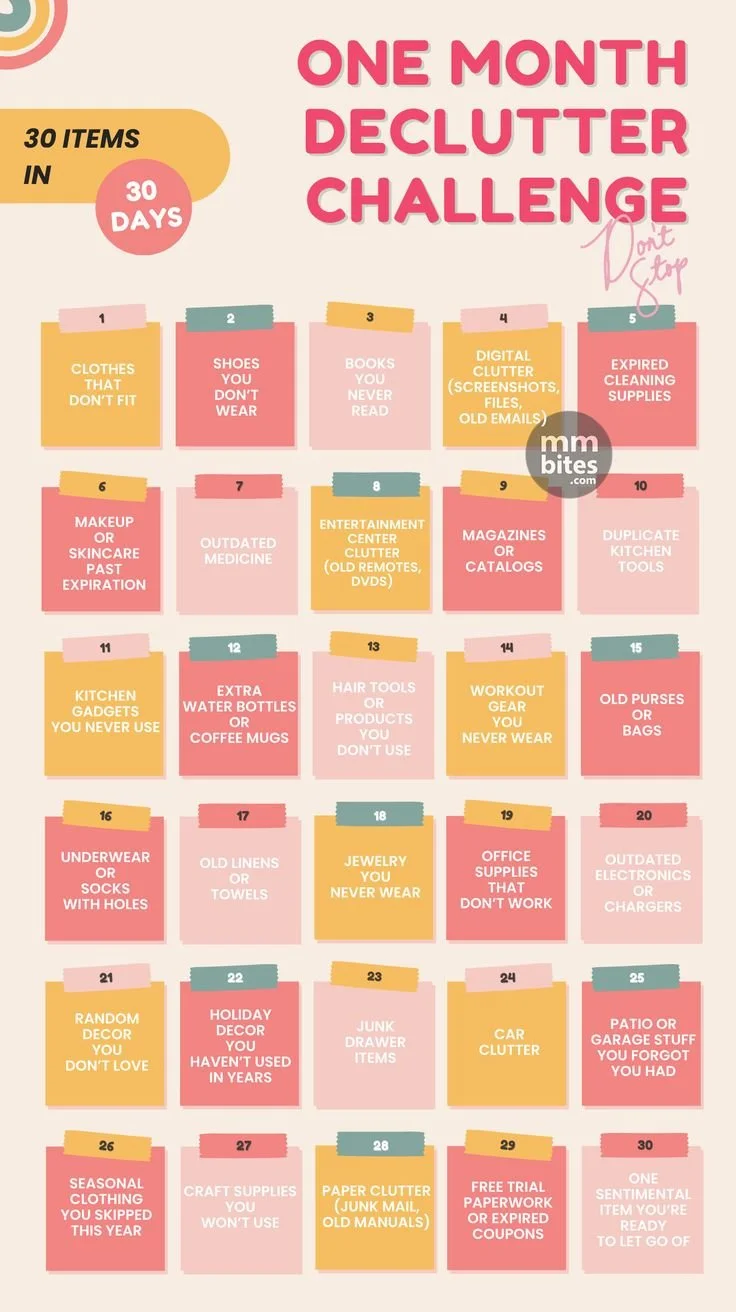
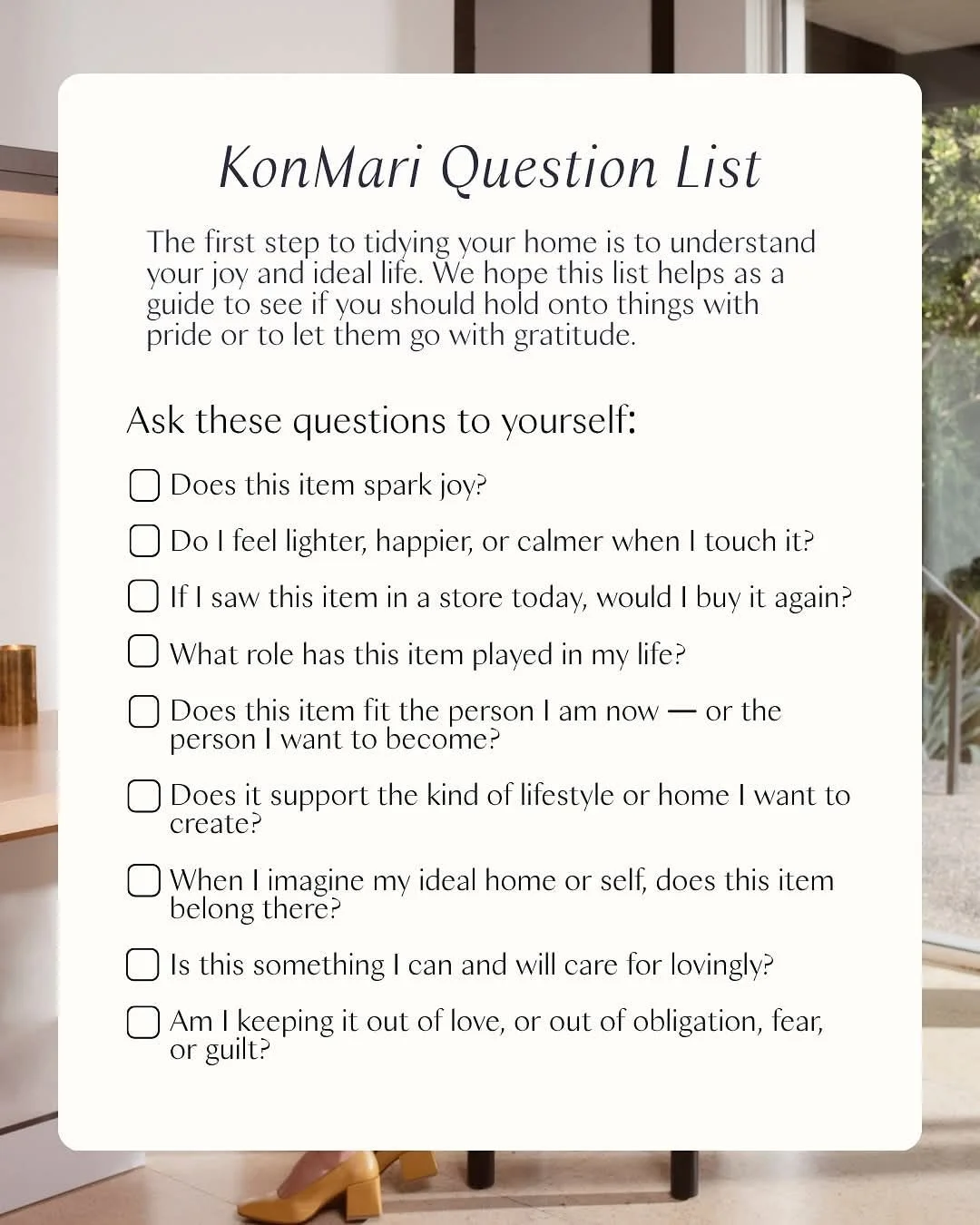
How To Get Rid Of Stuff
The Art of Letting Go
There is a particular kind of clarity that comes from an emptied drawer. Not the frantic, purging kind — the kind that happens slowly, deliberately, with a cup of tea going lukewarm on the counter while you decide, once and for all, whether you still need the good gravy boat you've never used.
Paring back is not about minimalism as an aesthetic. It's about making room — physically and otherwise — for a home that reflects how you actually live now, not how you lived five years ago, or how you imagined you might live when you bought that bread maker.
Why It's Worth Doing
Every object in your home asks something of you. It asks to be dusted, stored, moved, decided about. Multiply that by the hundreds of things tucked into closets and cabinets and the backs of drawers, and it's no wonder a cluttered home can feel loud even when it's silent.
A few reasons paring back matters, beyond the obvious appeal of a tidy shelf:
It restores attention. A home with less in it is a home where the things you kept can actually be seen — the good linens, the well-loved books, the pitcher your grandmother gave you. Clutter doesn't just take up space; it competes for your eye and your care.
It's an act of honesty. Holding onto something "just in case" or "because it was expensive" is often less about the object and more about avoiding a decision. Letting go asks you to be honest about who you are now, not who you were when you bought it.
It makes maintenance possible. A well-run home isn't about owning less for its own sake — it's about owning an amount you can actually tend to. Every added item is one more thing to eventually clean, repair, or manage. Fewer things, cared for well, will always outshine more things, cared for poorly.
It's a gift to your future self. Someone, someday, will have to go through your belongings — likely you, in a few years, or someone you love, someday further off. Editing now is a quiet kindness to whoever does that sorting later.
How to Decide What Stays
The hardest part of decluttering is rarely the letting go — it's the deciding. A framework helps. Work room by room, or category by category (all books together, all linens together), rather than drawer by drawer. Seeing the full scope of what you own in one category makes the decisions clearer and the duplicates obvious.
For each item, ask, in order:
1. Have I used this in the last year? Not "might I." Not "could I imagine a scenario." Have you, in fact, reached for it. Seasonal and sentimental items get more latitude here — a holiday item only needs to have been used last holiday season to count.
2. Do I have more than one, and does that serve me? Some duplication is sensible — everyday plates for two, plus a set for entertaining. Other duplication is just accumulation: four vegetable peelers, none of them your favorite. Keep the best version. Let the rest go.
3. Would I buy this again today, knowing what I know now? This question cuts through sunk cost quickly. If the honest answer is no, the fact that you already own it doesn't change that.
4. Is it beautiful, useful, or loved — and ideally, more than one of those? This is the closest thing to a north star for what belongs in a considered home. An object doesn't need to be all three. But if it's none of them, it's worth a second look.
5. What is the story I'm telling myself about why I'm keeping this? "I might need it" and "it was a gift" and "it was expensive" are all real feelings, but they're worth naming out loud. Sometimes naming the story is enough to see it clearly — and to release it with gratitude rather than guilt.
A practical note: sort into four piles as you go — Keep, Donate, Sell, and Undecided. Give yourself permission for an Undecided box, but set a rule that it must be resolved within thirty days, unopened. If you haven't thought about what's in it by then, you have your answer.
Where It Goes From Here
Deciding to let something go is only half the task. What happens next matters too — both for your own follow-through and for what becomes of the things you're releasing.
To sell, reserve this for items with real resale value — furniture, designer or barely-worn clothing, quality kitchen equipment, collectibles. Anything below a certain value (a good rule of thumb: if it would sell for less than $20, the time spent photographing, listing, and coordinating pickup usually isn't worth it) is generally better donated.
Furniture and larger home goods: Facebook Marketplace, a local consignment shop, or a neighborhood Buy Nothing group if you'd rather give it away with less friction.
Clothing: consignment stores for higher-end pieces, or resale platforms for everyday brands.
Books, media, and collectibles: specialty resale shops or online marketplaces built for the category — they tend to net more than general marketplaces.
To donate, match the item to the right recipient rather than defaulting to one bin for everything:
Clothing and household goods in good condition to a local thrift shop or shelter — many shelters have specific, seasonal needs worth calling ahead about.
Furniture in good repair to organizations that furnish homes for families in transition; several offer free pickup for larger pieces.
Books to a local library sale, a Little Free Library, or a literacy nonprofit.
Building materials, tools, and fixtures — leftover tile, hardware, light fixtures — to a habitat-for-humanity-style restore, which exists specifically for this category and is criminally underused.
Anything sentimental you're not ready to fully release — consider photographing it before it goes, so the memory stays even after the object doesn't.
To trash, reserve this truly for what's broken beyond repair, incomplete, or unsafe. Before you do, a final pass is worth it: could this be repaired rather than replaced? Could it be repurposed into something you'd actually use? And for anything electronic, battery-powered, or containing chemicals — check for a proper recycling or hazardous waste program in your area rather than sending it to a landfill.
A Closing Thought
None of this needs to happen in a weekend. In fact, it's better if it doesn't. Give yourself one category at a time, one honest afternoon at a time. The goal was never an empty house — it was a considered one. A home where everything in it earned its place, and you can feel that, even if you couldn't say exactly why.