

Managing Clutter
“Have nothing in your house that you do not know to be useful, or believe to be beautiful.”
Your story isn’t held in your things; it’s held inside of YOU. ❤️
Delete Photos Daily
If the task can be completed in one minute or less, do it without delay
one in, one out: for every item you bring in, you take one out
Don’t put things down, put them away.
once a week: What’s the trash bag method? 👉 Grab a trash bag and do a sweep of your house, seeing how quickly you can fill the bag. You can choose where the bag is headed—trash, recycling, or a donation center.
The silent to do list...a concept that blew my mind. 🤯
I read about it first in the book Goodbye, Things (by Fumio Sasaki).🫶
The reason why clutter feels so heavy, overwhelming, stressful is because...
The things around us send us messages constantly, like:
▪️Clean me
▪️Tidy me
▪️Return me
▪️Organise me
▪️You haven’t worn me yet
▪️You haven’t used me and I cost a lot of money
▪️You said you’d do this hobby and you haven’t
And more often than not, it’s a negative message.
One that makes us feel bad about ourselves.😰
Feeling like we’re lazy, unmotivated or failures.
That’s why clearing the clutter and the excess feels so good.✨
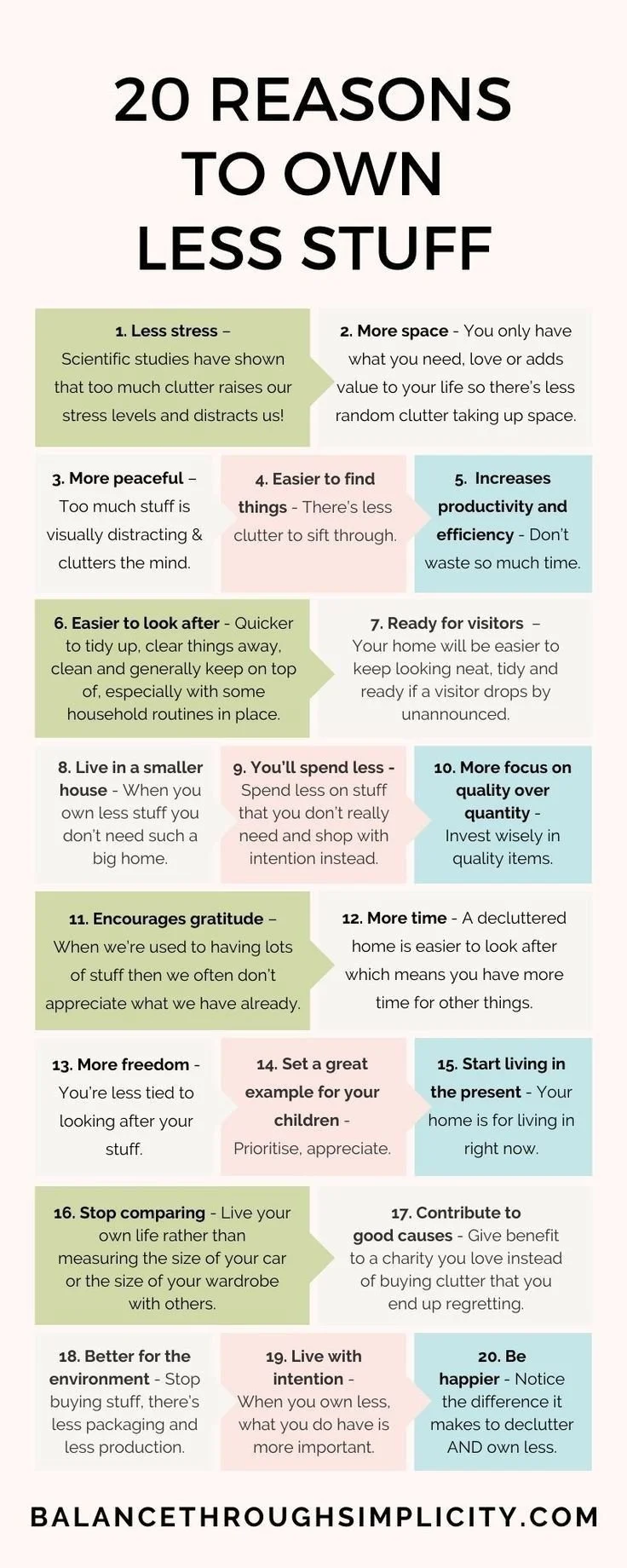
Removing clutter helps with mood, productivity, more space, more money, relieve stress, better sleep, more present.
Less stress, fewer worries, distractions …
If you don’t use it, let it go.
If it doesn’t add value to your life, let it go.
If you can’t afford it, let it go.
If you don’t want it, let it go.
If it weighs you down, let it go.
Clutter is rarely just about things. More often, it is about decisions postponed, transitions unfinished, and homes that have not been given the time or systems they deserve. A well-ordered home does not require perfection or minimalism—it requires intention.
Managing clutter is less about quick purges and more about creating rhythms that support daily life. When approached thoughtfully, order can feel calm, gracious, and sustainable.
Begin with How You Want to Live
Before sorting a single drawer, pause to consider how each space is meant to function. A home that supports real life will naturally resist clutter.
Ask yourself:
What activities happen here?
What should be easy to reach?
What does not belong in this room?
When function is clear, decisions about what stays—and what goes—become far simpler.
Edit in Small, Manageable Passes
Clutter becomes overwhelming when we attempt to tackle it all at once. Instead, work in contained categories or defined spaces: a single shelf, one drawer, the coat closet.
As you edit, sort items into four simple groups:
Keep: useful, beautiful, or genuinely meaningful
Store: seasonal or rarely used, but worth keeping
Donate: in good condition, no longer needed
Release: broken, expired, or no longer serving you
Progress made in small passes is far more likely to last.
Give Everything a Proper Home
Clutter often forms when items lack a clear place to live. Storage should support habits, not fight them.
A few guiding principles:
Store items where they are used, not where they ought to go
Keep everyday essentials at eye level or within easy reach
Use closed storage for visual calm; open storage for frequently used items
When putting something away is intuitive, order becomes effortless.
Favor Fewer, Better Containers
Bins, baskets, and boxes can be helpful—but only when used with restraint. Over-containerizing often hides clutter rather than solving it.
Choose containers that:
Are proportionate to the space
Reflect the tone of your home (natural materials age beautifully)
Encourage limits rather than excess
A container should define how much you keep—not expand it.
Establish Gentle Maintenance Rituals
A tidy home is maintained through rhythm, not constant effort.
Consider incorporating:
A five-minute evening reset
A weekly surface clear
A seasonal edit at the change of weather
These rituals prevent clutter from accumulating and keep the home feeling quietly composed.
Be Patient with Sentimental Belongings
Some items require time. Heirlooms, children’s artwork, and objects tied to memory deserve thoughtful consideration.
Rather than forcing decisions:
Choose a few meaningful pieces to display or properly store
Photograph items you are not ready to keep physically
Revisit sentimental categories gradually
Respecting the emotional life of your belongings leads to decisions you will not regret.
Remember: Order Is Meant to Serve You
A well-managed home does not feel sparse or strict. It feels welcoming, lived-in, and quietly supportive. Clutter fades when a home reflects clarity of purpose and care.
Managing clutter is not about doing more—it is about choosing well, maintaining gently, and allowing your home to breathe.
In time, order becomes less of a task and more of a natural expression of how you live.